
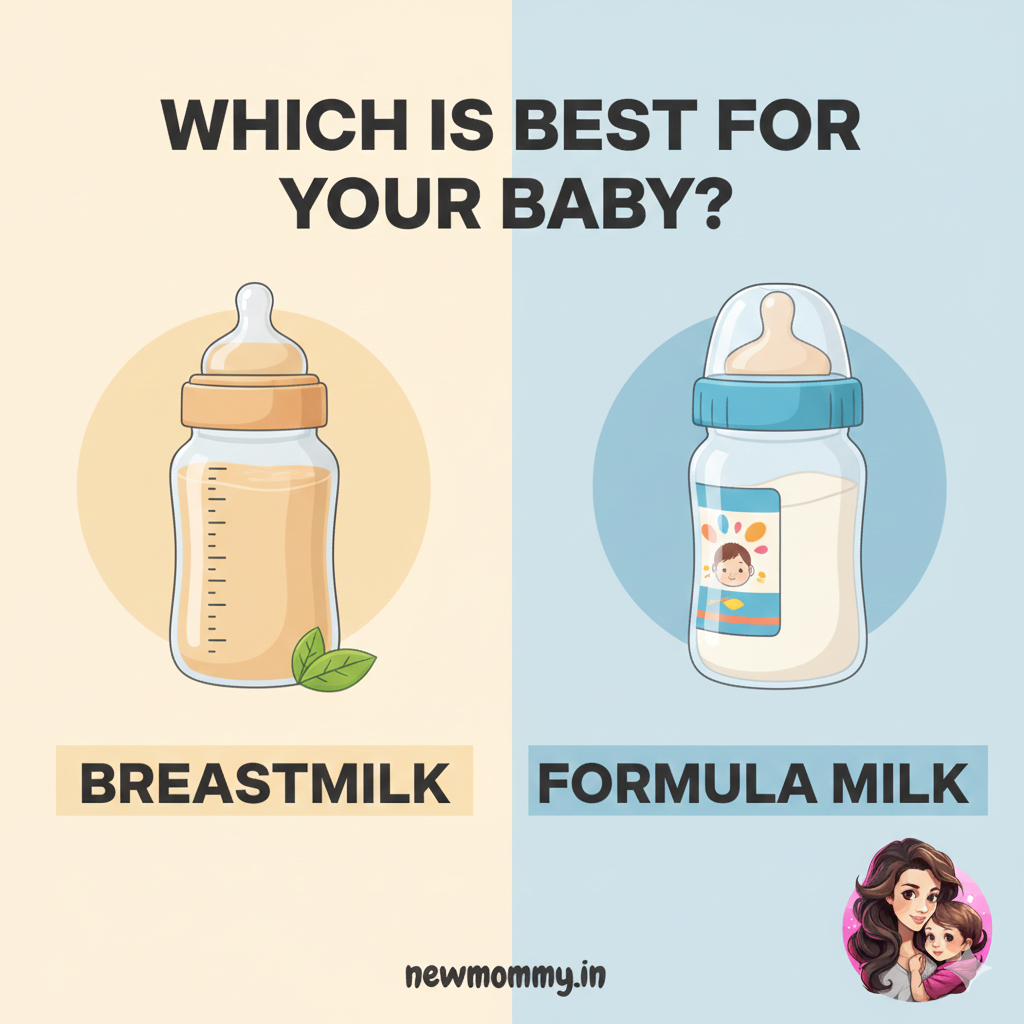
Introduction — Your Baby’s First Food Choice
Deciding how to feed your baby is one of the first big choices you’ll make as a parent. It’s personal, emotional, and sometimes overwhelming — especially with the pressure from well-meaning family, friends, and online opinions.
Whether you lean toward breastfeeding, formula, or a combination, the most important goal is that your baby is nourished, growing well, and healthy. Below, we explore the differences between breast milk and formula milk, why breast milk is often recommended, and how formula can be a supportive alternative when needed.
What Makes Breast Milk So Special
Breast milk isn’t just food — it’s a living fluid that changes with your baby’s needs. In the first days after birth, you produce colostrum, rich in antibodies and immune-boosting cells. As milk transitions, its composition adapts to your baby’s growth.
Here’s why breast milk is so highly regarded:
Immune Protection
Human milk contains antibodies, white blood cells, and oligosaccharides that help protect infants from infections, including ear, respiratory, and digestive issues.
Easier Digestion
Breast milk is designed to be easy on a newborn’s immature digestive system — meaning less gas, less constipation, and fewer spit-ups.
Nutrient Absorption
The nutrients in breast milk — fats, proteins, and sugars — are more easily absorbed and used by your baby than many formula components.
Long-Term Benefits
Some studies suggest breastfed babies may have lower risks of obesity, asthma, and certain chronic diseases later in life, although genetics and lifestyle also play a role.
Bonding and Hormones
Breastfeeding triggers oxytocin release — a hormone linked to strong bonding and emotional calm for both mom and baby.
What Is Infant Formula? How It Works
Infant formula is a scientifically designed substitute for breast milk when breastfeeding isn’t possible or practical. Most formulas are made from cow’s milk or plant-based proteins, adjusted with fats, carbohydrates, vitamins, and minerals to mimic the nutritional profile of breast milk as closely as possible.
Formula is regulated to ensure it meets an infant’s nutritional needs up to a certain age. It doesn’t contain living antibodies, but it provides essential nutrients — and many babies thrive on it.
Breast Milk vs Formula: Side-by-Side Comparison
| Feature | Breast Milk | Formula Milk |
|---|---|---|
| Nutrients | Dynamic and adapting | Static, manufactured |
| Immune protection | Strong natural antibodies | No natural immunity |
| Digestion | Easier for most babies | Can cause gas/constipation |
| Convenience | Always ready | Needs to be prepared and bottles cleaned |
| Flexibility | Requires mom | Can be given by any caregiver |
| Cost | Free | Ongoing expense |
| Food sensitivity | Fewer intolerances | Some babies need special formulas |
| Bonding | Natural skin-to-skin | Possible through holding |
When Formula Feeding Is a Healthy, Practical Choice
Choosing formula isn’t a failure — many families use it successfully for many reasons:
Medical or Physical Challenges
Some moms have low milk supply, latch difficulties, or take medications that make breastfeeding hard or unsafe.
Work, Travel, and Routine
Formula gives partners and caregivers the chance to feed the baby, and helps families share feeding responsibilities.
Specific Health Needs
Some babies may need specialized formulas due to allergies, intolerances, or digestive issues. Always consult a pediatrician for this.
Common Misconceptions Debunked
“Formula-fed babies always cry more.”
Not necessarily — every baby is different. Crying can be due to many causes unrelated to feeding.
“Breastfeeding is easy and natural for every mom.”
While natural, breastfeeding can be challenging — pain, supply issues, and latch problems are common. Support from lactation consultants helps.
“Formula is unhealthy.”
Formula is safe and nutritionally complete when prepared correctly. It’s a valid choice if it meets your family’s needs.
My Personal Feeding Journey
When my baby was born, I really wanted to breastfeed exclusively. I imagined it would be natural and easy. The first week was far from perfect — latching was painful, my baby seemed hungry, and I felt overwhelmed.
After talking to a lactation specialist, I learned better techniques, adjusted positions, and things improved. But when I returned to work, I combined breast milk with formula to make the transition smoother. This combo gave me peace of mind — baby was healthy, and feeding felt less stressful.
What mattered most was that my baby was fed, happy, and growing — not whether every ounce came from my breast.
Pros & Cons
Breast Milk
Pros
- Best immune protection
- Nutrient adaptability
- Free and always available
Cons
- Can be physically challenging
- Tied to mom’s schedule
- Some moms struggle with supply
Formula Milk
Pros
- Flexible feeding options
- Allows shared responsibilities
- Predictable portion size
Cons
- No natural antibodies
- Requires clean preparation
- Ongoing cost
Frequently Asked Questions
1.Is breast milk really always better than formula?
Breast milk provides unique immune and nutritional benefits that formula can’t fully replicate, but formula is a safe and effective alternative when needed.
2.Can babies thrive on formula?
Yes. Well-prepared formula meets infants’ nutritional needs and many formula-fed babies grow up healthy and strong.
3.Can I combine breastfeeding and formula?
Absolutely. Many moms use a “mixed feeding” approach to balance convenience and nutrition.
4.Do I need a lactation consultant?
If you face pain, supply issues, or latch problems, a lactation consultant can be a game changer.
5.Does breastfeeding reduce mom’s cancer risk?
Research suggests breastfeeding may lower the risk of breast and ovarian cancers.
Conclusion — What’s Best for Your Baby?
There’s no one-size-fits-all answer. Breast milk offers unmatched immune-boosting benefits and adaptability to your baby’s needs. Formula provides safe, reliable nutrition when breastfeeding isn’t possible or to share feeding duties with others.
The best choice is the one that keeps your baby healthy, growing, and loved. Talk to your pediatrician, trust your instincts, and embrace what works for your family.
💛 Babies thrive on love — and well-nourished babies thrive on whatever nourishes them best.



The text has an organic cohesion. Phrases grow naturally from one another, forming a structure that feels alive and intentional without being rigid.