
Why I’m Reviewing This Pump
I started using the LuvLap Glory on days I was working from home, laptop open, baby finally down for a nap. That’s exactly the situation where a hands-free pump earns its keep — I didn’t have to carry anything or hold a single part in place, and it was quiet enough that it never woke my baby up. It turned out to be just as handy in the car during longer drives, when stopping to pump the traditional way simply isn’t an option.
Somewhere between the third feed of the day and the fourth load of laundry, most pumping moms hit the same wall: the pump works fine, but it chains you to a chair, an outlet, and a closed door. The LuvLap Glory Hands-Free Dual Pump exists to solve exactly that problem. That’s why it keeps showing up in “best wearable pump India” searches.
This review covers what the pump actually does well, where it falls short, and who it’s genuinely a good fit for — not just a rewritten spec sheet.
The Real Problem With Traditional Pumps
If you’ve pumped with a standard double electric pump, you know the drill. You find an outlet, sit still for 15-20 minutes, hold the bottles in place (or buy a hands-free bra separately), and hope nobody knocks on the door mid-session. For working moms doing this two or three times a day, it adds up to real lost time. Many moms end up skipping sessions altogether, and that can affect milk supply over time.
Wearable pumps remove that friction by design. Instead of sitting at a machine, the pump sits inside your bra. No tubes, no bottles balanced in your lap, no being stuck in one spot. The LuvLap Glory is one of the more affordable entries into this category in India. That affordability is exactly why so many moms ask whether it performs as well as the pricier wearable pumps.
It’s a fair question. Wearable pumps as a category are still newer than traditional double electric pumps, and the price range varies enormously — from budget options under a few thousand rupees to premium imported pumps costing several times more. Before spending on any of them, know exactly what you’re trading off. No wearable pump on the market matches the raw suction power of a hospital-grade unit. The real question isn’t “is this the strongest pump available” — it’s “does this pump do what I actually need, at a price that makes sense.”
What the LuvLap Glory Actually Offers
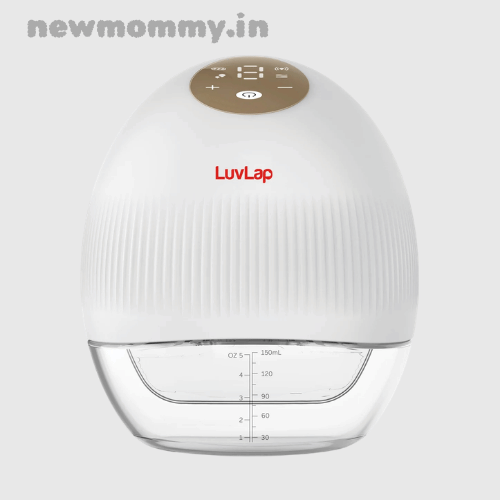
The Glory is a dual wearable electric breast pump — meaning both cups pump at the same time, and each one sits fully inside your bra with no external tubing connecting them to anything. It runs on a rechargeable 1300 mAh lithium-ion battery that charges through Type-C. LuvLap rates it for up to roughly two hours of use per full charge, which typically covers several pumping sessions before you need to plug it back in.
It comes with two milk storage containers (one per side), a 24mm breast shield, and three soft flange inserts (19mm, 21mm, and 27mm), so you’re not stuck with a single size the way many entry-level wearable pumps ship. There’s also an anti-backflow valve design, which reduces milk flowing back toward the motor housing during use — a detail that matters both for hygiene and for the life of the pump.
Thinking about switching to a hands-free pump? Check today’s price on the LuvLap Glory and see if it fits your pumping routine.
You can check current pricing on the LuvLap Glory here.
Key Features at a Glance
- Hands-free, tube-free wearable design — worn fully inside a nursing bra
- Dual pump — expresses from both breasts simultaneously
- 4 pumping modes and 9 suction levels for a customizable session
- Type-C fast charging, 1300 mAh rechargeable battery, up to ~2 hours of use per charge
- Anti-backflow valve
- Two milk containers included
- 24mm breast shield with 19mm / 21mm / 27mm flange inserts included
- Runs quietly enough for office or shared-space use
How the Glory Compares to Other Wearable Pumps
| Pump | Modes/Levels | Battery | Flange Sizes Included | Best For |
| LuvLap Glory | 4 modes / 9 levels | ~2 hrs, Type-C | 19/21/24/27mm | Budget-conscious moms wanting hands-free convenience |
| Medela Duo | Multi-phase | Corded/rechargeable options | Standard, inserts sold separately | Moms prioritizing proven suction strength |
| Bump2Cradle PumpNGo | Multiple modes | Rechargeable | Limited sizes | Moms wanting a mid-range wearable option |
| Promom Neo | Multiple modes | Rechargeable | Limited sizes | First-time wearable pump buyers |
Where the Glory pulls ahead is the included flange size range — three inserts plus the base shield size means more moms land on a comfortable fit without an extra purchase. Where it’s more middle-of-the-pack is raw suction strength. If you’re the kind of pumper who needs maximum output in minimum time, this isn’t the strongest pump on the market — but that’s a fair trade-off for the price point.
Getting Started: Step-by-Step Setup Guide
- Charge fully before first use. Give it a full charge cycle through the Type-C port before your first session, even if it shows partial battery out of the box.
- Wash and sterilize all milk-contact parts — flanges, containers, valves — before the first use, and after every session going forward.
- Pick your flange size. Start with the 24mm shield; if it feels tight or pulls uncomfortably, try the 21mm or 19mm insert. If it feels like there’s excess space around the nipple with visible rubbing on the areola, size up to 27mm.
- Insert the pump into your nursing bra so the flange sits centered over the nipple, not off to one side.
- Start on the lowest suction level in stimulation mode for the first 1-2 minutes to encourage let-down, then increase gradually as milk starts flowing.
- Switch to expression mode once let-down happens, adjusting suction to a level that feels strong but never painful.
- Pump for 15-20 minutes, or until flow noticeably slows.
- Disassemble, wash, and store parts according to the included care instructions.
Benefits of Switching to a Wearable Pump
- Time reclaimed. No longer having to sit still means pumping fits around your schedule instead of dictating it.
- More discreet pumping — useful in shared offices, on flights, or around family members who aren’t used to a traditional pump.
- Fewer skipped sessions. When pumping is less disruptive, moms are more likely to keep to a consistent schedule, which matters for maintaining supply.
- Lower entry cost into the wearable pump category compared to premium international brands.
Expert Tips for Getting the Most Out of It
- The World Health Organization recommends frequent, effective milk removal to support ongoing supply — a wearable pump only helps with this if you’re actually using it consistently, so build it into a routine rather than an afterthought.
- The CDC recommends cleaning all pump parts that touch milk after every single use, and air-drying rather than towel-drying to reduce contamination risk.
- If suction feels weak even on the highest level, check the valve and membrane for tiny tears or milk residue — a common, fixable cause of reduced performance, not always a defective unit.
- Pumping both sides at once (which this pump allows) often produces slightly higher milk output per session than pumping one side at a time — use the dual function even on days you’re short on time.
- Keep a consistent pumping schedule where possible — your body responds to routine, and irregular gaps between sessions are one of the more common, fixable causes of a dip in output.
- If you’re pumping at work, block time on your calendar for it rather than fitting it in around meetings. Treating it as a non-negotiable appointment, the same way you would a client call, tends to protect the consistency that keeps supply steady.
Common Mistakes New Users Make
- Using the wrong flange size and pushing through discomfort. Fix: try all three included inserts before assuming the base size is correct — a poor fit reduces both comfort and output.
- Starting on high suction immediately. Fix: always begin low in stimulation mode; higher isn’t more effective, and it can cause nipple soreness.
- Not fully charging before first use. Fix: give it a complete charge cycle before day one to get an accurate read on real battery life.
- Skipping the anti-backflow valve check during cleaning. Fix: inspect and clean this part carefully each time — it’s a common site for buildup.
- Assuming a wearable pump replaces hands-on lactation support. Fix: for supply concerns, especially in the early postpartum weeks, a lactation consultant should still be part of the plan.
Daily and Weekly Maintenance Routine
Keeping any pump — wearable or otherwise — clean is what protects both your baby’s health and the pump’s suction performance over time. A simple routine to build into your day:
After every session:
- Rinse all milk-contact parts (flanges, valves, containers) in cool water first, before washing, so milk proteins don’t set from hot water.
- Wash with warm soapy water or run through a bottle-safe dishwasher cycle if the manual allows it.
- Air-dry on a clean towel or drying rack rather than wiping with a cloth, which can reintroduce bacteria.
Once a day:
- Fully wipe down the motor housing (not submerged — this part shouldn’t get wet) with a clean, damp cloth.
- Check the anti-backflow valve and membrane closely for any milk residue trapped in the folds — this is the single most common spot people miss.
Once a week:
- Sterilize milk-contact parts using a steam sterilizer, sterilizing bags, or boiling water, depending on what the manual recommends for the specific plastic and silicone parts.
- Inspect the flange and valve for any small tears, cloudiness, or stretching — worn parts reduce suction and should be replaced rather than pushed through.
Skip this routine and suction performance quietly drops over a few weeks. Many people mistake this for a “defective pump” when it’s really a maintenance gap.
Pros and Cons
Pros
- Genuinely hands-free with no external tubing
- Three included flange inserts plus base shield size
- Fast Type-C charging
- Reasonably quiet motor
- Two containers included, ready to use out of the box
Cons
- Suction is gentler than premium/hospital-grade pumps — better for maintenance than rapid supply-building
- ~2-hour battery life means you’ll need to recharge for all-day heavy use
- Some buyers online have reported slower after-sales/replacement-part response — worth checking recent reviews and keeping your warranty card
- Like most wearable pumps, fit is snug, which may not suit every body comfortably
Who This Pump Is Best For (and Who Should Skip It)
Best for:
- Moms who are past the early supply-establishment phase and pumping to maintain an existing supply
- Working moms who need to pump discreetly during meetings, commutes, or short breaks
- Moms who’ve been using a traditional double electric pump and want to add a hands-free option for busy days, without replacing their main pump entirely
- Budget-conscious buyers who want to try wearable pumping without a premium price tag
Might want to look elsewhere:
- Moms in the first 1-2 weeks postpartum who are actively working to establish supply — a stronger corded double pump, ideally alongside lactation consultant support, tends to be more effective here
- Moms who pump for 30+ minutes multiple times a day and need longer battery life without mid-day charging
- Moms with larger breast tissue who may not get a comfortable fit even with the largest included flange insert (worth checking exact flange dimensions against your own measurements first)
How to Store and Handle Pumped Milk Safely
A wearable pump doesn’t change the basic safe-handling rules for breast milk, and it’s worth reviewing them if you’re new to pumping regularly:
- Room temperature: freshly pumped milk is generally fine at room temperature for up to 4 hours.
- Refrigerator: properly stored milk is generally good in the fridge for up to 4 days.
- Freezer: for longer storage, a standard freezer keeps milk good for several months; a deep freezer extends that further.
- Labeling: always label containers with the date pumped, and use the oldest milk first.
- Thawing: thaw in the refrigerator overnight or under running warm water — never in a microwave, which can create hot spots and damage nutrients.
These general guidelines follow CDC recommendations on breast milk storage — always check the most current CDC or AAP guidance, since safe-storage windows are occasionally updated.
Frequently Asked Questions
1.Is the LuvLap Glory good for a newborn’s milk supply-building phase?
It can work, but a stronger corded or hospital-grade pump is usually better in the first few weeks when supply is still establishing. The Glory shines more once you’re maintaining an established supply.
2.How long does the battery actually last?
LuvLap rates it at up to around two hours of use per full charge, which usually covers a few pumping sessions before it needs recharging via the Type-C port.
3.What flange size should I start with?
Start with the included 24mm shield, then try the 19mm or 21mm insert if it feels loose, or the 27mm if it feels tight — comfort, not guesswork, should decide the size.
4.Is it loud enough that coworkers would notice?
It runs quietly for a wearable pump, though no electric pump is truly silent. Most users say it’s discreet enough for a closed-door office setting.
5.Does it come with everything needed to start pumping right away?
Yes — two containers, the breast shield, flange inserts, and the charging cable are included, though you’ll want extra containers or storage bags for daily use.
6.Can I use it while wearing regular clothes, or do I need a special bra?
It works best inside a snug nursing bra or pumping bra that holds it close to the body. A loose regular bra won’t hold the flange in place well enough for a good seal.
7.Is it safe to pump both sides at the same time every session?
Yes — dual pumping is standard practice, and it generally produces slightly better milk output per session than single-side pumping, as long as suction stays comfortable on both sides.
Final Verdict
The LuvLap Glory is a solid, budget-friendly entry point into hands-free wearable pumping — strongest for moms past the early supply-building phase who want convenience without a premium price tag. It’s not the pump for maximum suction power, but for freeing up your hands and your schedule, it does the job it’s built for.
Affiliate Disclaimer: This post contains affiliate links. If you buy through them, NewMommy.in may earn a small commission at no extra cost to you.