🌸 Introduction:
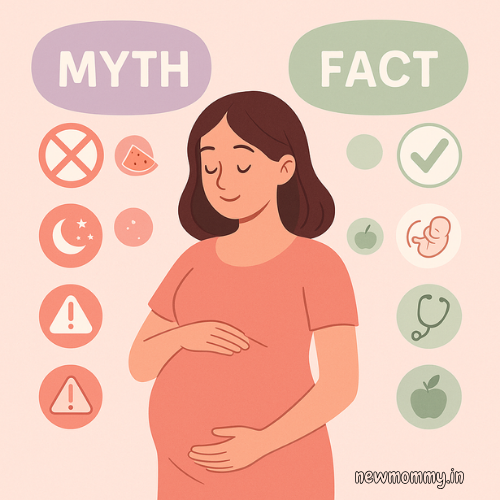
Pregnancy is one of the most beautiful and transformative phases in a woman’s life — but it’s also surrounded by countless myths that can leave expecting moms feeling confused or anxious. From old wives’ tales to well-meaning advice, it’s hard to know what’s fact and what’s fiction. That’s why at NewMommy.in, we’re setting the record straight. In this article, we uncover the most common pregnancy myths and share the scientifically proven facts every expecting mom deserves to know — helping you make confident, informed choices for a healthy and happy pregnancy. 💕
🍼 Myth 1: You Should Eat for Two
Myth: “Now that you’re pregnant, you should eat for two!”
Fact: While it’s true that your body needs extra nutrients, it doesn’t mean you should double your food intake. Overeating can lead to unhealthy weight gain and complications like gestational diabetes or high blood pressure.
Reality Check:
You only need around 300 extra calories per day in the second and third trimesters — equivalent to a small, nutritious snack. Focus on quality, not quantity.
Tip:
- Include leafy greens, fruits, lean proteins, and whole grains.
- Don’t forget your prenatal vitamins — like this top-rated option for daily support.
☀️ Myth 2: Morning Sickness Only Happens in the Morning
Myth: Nausea and vomiting only happen in the morning.
Fact: The term “morning sickness” is misleading — symptoms can occur any time of the day or night. Hormonal changes, especially rising hCG levels, trigger this condition.
Reality Check:
Most women experience relief after the first trimester, but some may feel queasy longer.
Tip:
- Eat small, frequent meals.
- Keep dry snacks like crackers by your bedside.
- Ginger tea or vitamin B6 supplements (consult your doctor) can help.
💖 Myth 3: The Shape of Your Belly Reveals the Baby’s Gender
Myth: Carrying high means a girl; carrying low means a boy.
Fact: The shape of your belly depends on your body type, muscle tone, and the baby’s position, not gender.
Reality Check:
There’s no scientific link between belly shape and your baby’s sex. The only accurate way to know is through an ultrasound or medical test.
🌿 Myth 4: Pregnant Women Should Avoid Exercise
Myth: Physical activity is unsafe during pregnancy.
Fact: Unless your doctor advises against it, regular exercise is highly beneficial during pregnancy. It helps manage weight, improves circulation, and reduces stress and back pain.
Reality Check:
Gentle exercises like prenatal yoga, swimming, and walking are perfectly safe.
Tip:
Invest in comfortable maternity activewear to support your growing belly while staying fit.
☕ Myth 5: Coffee Is Off-Limits
Myth: You must give up coffee completely when pregnant.
Fact: Moderate caffeine intake is considered safe — limit to under 200 mg per day (roughly one regular cup).
Reality Check:
Too much caffeine may increase the risk of miscarriage or low birth weight, so moderation is key.
Tip:
Try decaf coffee or herbal teas as a soothing alternative.
🌙 Myth 6: You Must Sleep Only on Your Left Side
Myth: Sleeping on your left side is the only safe position.
Fact: While the left side is recommended for better blood flow, occasional shifts in position are normal and safe. What matters most is being comfortable.
Tip:
Use a pregnancy body pillow for belly and back support during rest.
👶 Myth 7: Heartburn Means Your Baby Will Have a Lot of Hair
Myth: Experiencing heartburn means your baby will be born with a full head of hair.
Fact: There’s a small amount of truth to this! A 2006 study suggested a mild link between higher estrogen levels (which cause heartburn) and baby hair growth. However, it’s not reliable enough to predict anything.
Reality Check:
Heartburn happens because the growing uterus presses on the stomach, allowing acid to rise.
Tip:
Eat smaller meals, avoid spicy food, and sleep with your head slightly elevated.
🌺 Myth 8: You Should Avoid Sex During Pregnancy
Myth: Sex can hurt the baby or cause miscarriage.
Fact: In most healthy pregnancies, sex is completely safe. The baby is protected by the amniotic sac and uterine muscles.
Reality Check:
Avoid intercourse only if you experience complications like placenta previa, bleeding, or preterm labor — always consult your doctor first.
🧘 Myth 9: Stress Directly Harms the Baby
Myth: Any stress will negatively affect the baby’s growth.
Fact: Everyday stress is normal and won’t harm your baby. However, chronic stress over long periods can impact your well-being and sleep quality.
Tip:
Practice deep breathing, prenatal meditation, or gentle yoga. Try using aromatherapy diffusers like this one to create a calm atmosphere at home.
🌸 Myth 10: All Pregnancies Are the Same
Myth: Every pregnancy feels the same, so you can follow what worked for others.
Fact: Every woman — and every pregnancy — is different. Symptoms, cravings, and energy levels vary widely.
Reality Check:
Don’t compare yourself to others. Trust your instincts and follow your healthcare provider’s guidance.
🌸 Final Conclusion
Pregnancy is a time of excitement, change, and countless questions — but it’s also surrounded by myths that can cause confusion or unnecessary fear. By understanding the difference between traditional beliefs and proven medical facts, you can make informed decisions that support both your health and your baby’s well-being.
Remember, every woman’s pregnancy journey is unique. What truly matters is following professional medical advice, listening to your body, and creating a calm, positive environment for yourself and your growing baby.
We’re here to guide you every step of the way — from trusted pregnancy care information to carefully selected maternity and baby essentials that make motherhood easier and more joyful. 💕
✨ Affiliate Disclosure:
This post contains affiliate links. If you purchase through these links, we may earn a small commission at no extra cost to you. This helps support our blog.